
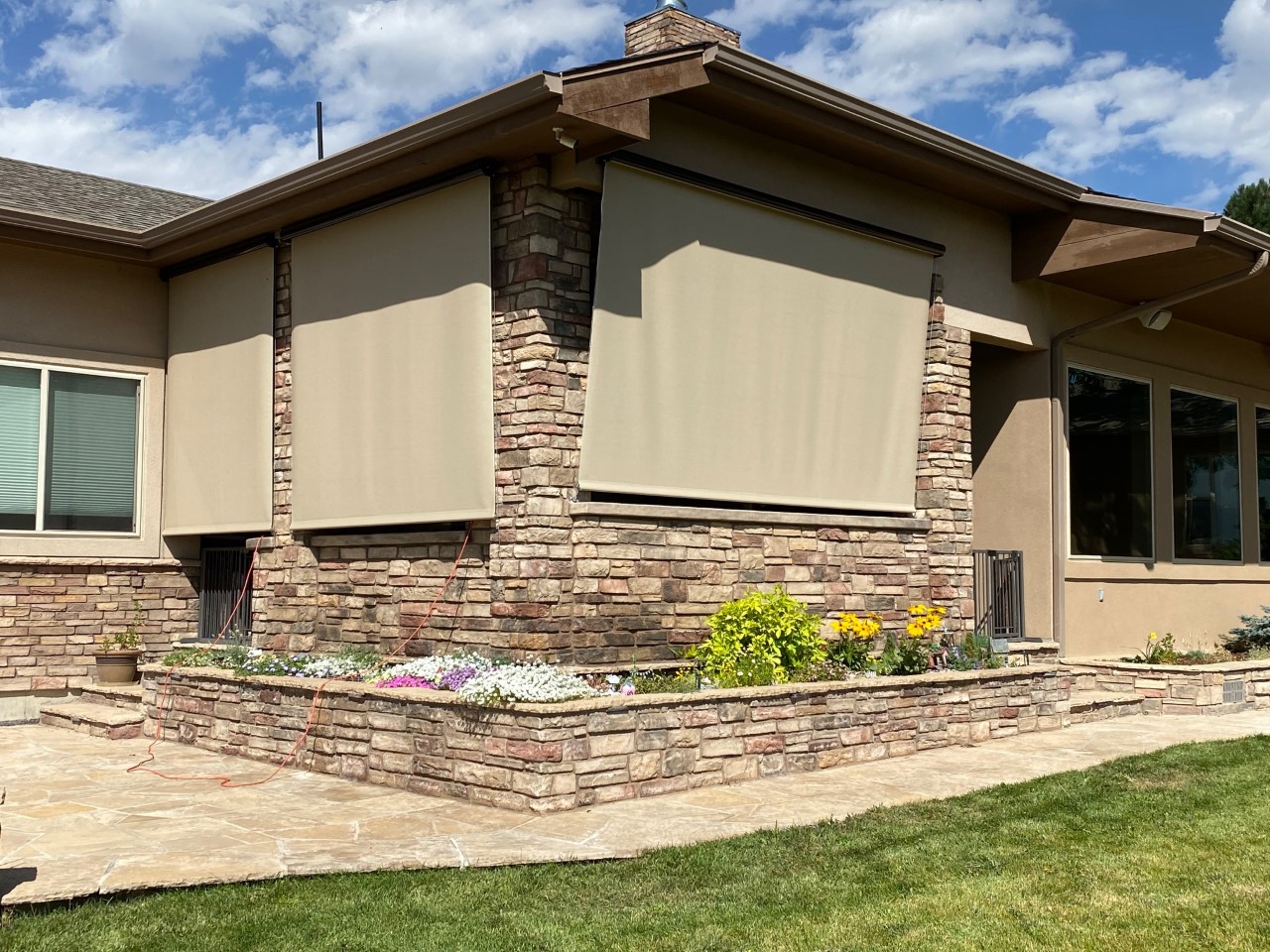
If you’ve been shopping for a retractable awning, you’ve probably already realized there’s more to the decision than just picking a color or fabric. One of the biggest choices you’ll face is whether to go motorized or manual. Both options have their merits, and the right pick really depends on your lifestyle, your budget, and how you plan to use your awning day to day.
Let’s break it down so you can make the call with confidence.
What’s the Difference?
At their core, both motorized and manual retractable awnings do the same thing: they extend to give you shade and retract when you don’t need them. The difference is in how you operate them.
A manual awning uses a hand crank to extend and retract the fabric. You walk up to it, give the crank a few turns, and you’re done. Simple, reliable, and no batteries or wiring required.
A motorized awning does the work for you at the press of a button, usually via a wall switch or a handheld remote. Many models can even be paired with smart home systems or sensors that automatically retract the awning when wind speeds get too high.
The Case for Manual Awnings
Manual awnings tend to be the more budget-friendly option upfront, and for a lot of homeowners, they’re a perfectly practical choice. If your awning isn’t something you plan to adjust multiple times a day, a crank mechanism gets the job done without any added complexity.
There’s also something to be said for simplicity. Manual awnings have fewer components, which means fewer things that could ever need servicing. If you’re someone who prefers a low-maintenance setup, a manual awning might actually be the better long-term fit.
That said, manual awnings do have their drawbacks. If you have a larger awning, cranking it open and closed can take a bit of effort. And if mobility or joint pain is a concern, that repetitive motion might not be ideal.
The Case for Motorized Awnings
Motorized awnings are increasingly popular, and it’s easy to see why. The convenience factor is hard to beat. You can extend or retract your awning without leaving your patio chair, which makes it much more likely that you’ll actually use it regularly.
For homeowners in Colorado and Southern California, weather can change quickly. A motorized awning with a wind sensor is a smart investment because it can automatically retract before a sudden gust does any damage. Here on the Colorado Front Range, afternoon thunderstorms can roll in fast, and having an awning that responds on its own gives you real peace of mind.
Motorized awnings also tend to add a premium feel to your outdoor space, which can be a nice bonus if you’re thinking about resale value or just want your patio to feel a little more polished.
The main trade-off is cost. Motorized awnings do carry a higher price tag, and there’s more involved in the installation process. But for many homeowners, the added convenience is well worth it.
So Which One Should You Choose?
Here’s a simple way to think about it:
Go with a manual awning if you’re working with a tighter budget, you have a smaller awning footprint, and you don’t mind a little bit of cranking. It’s a solid, dependable option that will serve you well for years.
Go with a motorized awning if convenience is a priority, you have a larger or high-mounted awning, you live somewhere with unpredictable weather (hello, Denver and Colorado Springs), or you just want the best possible experience on your patio.
Let’s Help You Decide
At Liberty Home Products, we manufacture and install retractable awnings for homeowners across the Colorado Front Range and Southern California, including Orange County. We’re happy to walk you through both options and help you find the right fit for your home and budget.Explore our retractable awnings or reach out to us directly to get started. We’d love to help you make the most of your outdoor space.